A touchpoint is any moment of interaction, contact, or connection between people, systems, or brands. It can happen during a quick email, a sales call, a website visit, or a face-to-face conversation. In business and customer experience strategy, a touchpoint refers to every communication channel, engagement moment, or brand encounter that shapes perception. In daily life, it may simply mean a small but meaningful exchange that strengthens a relationship.
Understanding synonyms for touchpoint improves communication clarity, emotional intelligence, and professional writing. Choosing the right word helps you express ideas more precisely in marketing, leadership, teamwork, and relationship-building. It also strengthens customer engagement, brand messaging, and audience trust.
Below, you’ll find 35 carefully explained alternatives. Each one includes a simple meaning, practical explanation, best-use guidance, and real-life examples to help you communicate with accuracy and confidence.
What Does Synonyms for Touchpoint Mean?
The phrase synonyms for touchpoint refers to alternative words or expressions that convey the idea of a moment of interaction, contact point, or engagement opportunity between people, brands, systems, or experiences. In business and communication contexts, a touchpoint is any instance where interaction occurs—such as a website visit, customer service call, email, or in-person meeting.
Common substitutes include point of contact, interaction point, connection moment, engagement channel, and customer interface. Each variation carries slightly different emotional and contextual weight. For example, point of contact feels formal and procedural, while connection moment suggests a more relational or emotional exchange.
In real life, touchpoints shape perception. A friendly cashier interaction, a smooth app interface, or a thoughtful follow-up email can positively influence brand experience and trust formation. Psychologically, repeated positive touchpoints strengthen memory association and emotional loyalty, making the concept central in fields like marketing, user experience (UX), and relationship management.
Read More: Synonyms for First of All | 35 Best Alternatives & Examples
Origins and Background of Synonyms for Touchpoint
The word touchpoint originated from physical language—literally meaning a point where two objects make contact. Over time, business and marketing professionals adopted it metaphorically to describe moments of customer interaction.
The evolution of the concept reflects broader shifts in communication and commerce:
| Era | Development | Significance |
| Pre-1900s | Literal physical meaning | Used in anatomy and geometry |
| Mid-1900s | Early business usage | Emerged in sales and customer service |
| 1990s | Rise of digital marketing | Expanded to websites and email |
| 2000s–Present | Omnichannel strategies | Integrated into customer journey mapping |
As industries embraced consumer psychology and brand strategy, professionals began refining related terminology. This led to varied synonyms such as customer interaction point, brand encounter, and engagement touch—each emphasizing different strategic angles.
Today, in fields like UX design, CRM (Customer Relationship Management), and digital strategy, the concept plays a foundational role in shaping holistic customer experiences.
Read More: Synonyms of Pedicure | 35 Best Alternatives & Usage Examples
List of 35 Synonyms for Touchpoint with Meaning & Examples
1. Interaction
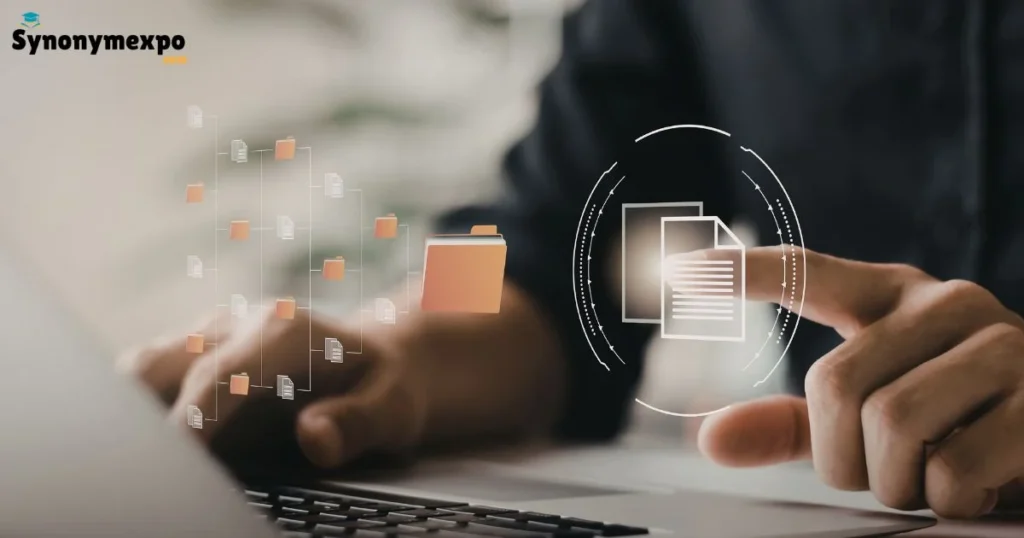
Meaning: A mutual action or exchange between two or more people or systems.
Explanation: An interaction involves active participation from both sides. It commonly appears in customer service, teamwork, education, and digital communication.
Use When: Use it when both parties respond to each other in real time or over a period.
Examples:
- The positive interaction with support improved the customer’s trust.
- Every classroom interaction helps students stay engaged.
2. Connection
Meaning: A link or relationship between people, ideas, or systems.
Explanation: A connection highlights emotional bonding or professional linking. It focuses on relationship development and trust.
Use When: Use it when emphasizing emotional closeness or meaningful communication.
Examples:
- She built a strong connection with her mentor.
- Brands use storytelling to create a connection with their audience.
3. Engagement
Meaning: Active involvement, interest, or participation.
Explanation: Engagement reflects attention and emotional investment. In marketing strategy, it measures how audiences interact with content.
Use When: Use it when showing interest, participation, or audience response.
Examples:
- Social media engagement increased after the campaign launch.
- The teacher encouraged student engagement through discussion.
4. Encounter
Meaning: An unexpected or planned meeting.
Explanation: An encounter can be brief or significant. It often describes a first brand experience or personal meeting.
Use When: Use it when describing a specific meeting moment.
Examples:
- Her first encounter with the company was impressive.
- We had a quick encounter at the conference.
5. Contact
Meaning: Direct communication or physical meeting.
Explanation: Contact refers to communication through phone, email, or in person. It is common in business communication.
Use When: Use it for formal or professional communication.
Examples:
- Please contact support for assistance.
- He made initial contact with the client yesterday.
Read More: Synonyms of Water Cycle | 35 Best Alternatives & Examples
6. Communication
Meaning: The exchange of information or ideas.
Explanation: Communication focuses on sharing messages clearly through different channels.
Use When: Use it when emphasizing message delivery.
Examples:
- Clear communication prevents misunderstandings.
- The team improved internal communication this year.
7. Exchange
Meaning: A two-way sharing of information or items.
Explanation: An exchange highlights reciprocity in dialogue or value. It strengthens customer interaction and teamwork.
Use When: Use it when both sides contribute equally.
Examples:
- The email exchange clarified the issue.
- Their exchange of ideas led to innovation.
8. Interface
Meaning: A point where two systems or people meet and interact.
Explanation: In technology and UX design, an interface connects users with digital systems.
Use When: Use it in tech or system-related contexts.
Examples:
- The app interface is easy to use.
- The dashboard acts as the main interface for users.
9. Moment of Contact
Meaning: A specific time when communication happens.
Explanation: This phrase emphasizes timing in customer experience journeys.
Use When: Use it for a brief but meaningful connection.
Examples:
- That moment of contact shaped her opinion of the brand.
- A polite moment of contact builds trust.
10. Meeting Point

Meaning: A place or situation where people connect.
Explanation: A meeting point can be physical or virtual, supporting collaboration.
Use When: Use it for shared spaces or ideas.
Examples:
- The forum became a meeting point for professionals.
- The café is our usual meeting point.
Read More: Synonyms of Archaeology | 35 Best Alternatives & Usage Examples
11. Point of Engagement
Meaning: A stage where active involvement begins.
Explanation: In marketing funnels, it marks where audiences start interacting.
Use When: Use it in strategic discussions.
Examples:
- The landing page is the first point of engagement.
- Email campaigns create new points of engagement.
12. Customer Interaction
Meaning: Communication between a business and a client.
Explanation: A key element of customer experience management.
Use When: Use it in service or sales discussions.
Examples:
- Every customer interaction affects brand loyalty.
- The company trains staff for better customer interaction.
13. Brand Experience
Meaning: A person’s overall perception of a company through interactions.
Explanation: Brand experience includes emotions, service quality, and messaging.
Use When: Use it in branding strategy.
Examples:
- The event improved the brand experience.
- Packaging plays a role in brand experience.
14. Engagement Moment
Meaning: A specific time when involvement occurs.
Explanation: It highlights emotional or active participation.
Use When: Use it when timing matters.
Examples:
- The live chat created an engagement moment.
- Every follow-up email can be an engagement moment.
15. Communication Channel

Meaning: A method used to send or receive messages.
Explanation: Includes email, phone, social media, and websites.
Use When: Use it in strategy or planning contexts.
Examples:
- Email is a primary communication channel.
- Choose the right communication channel for clarity.
Read More: Synonyms of Dopamine | 35 Best Alternatives & Examples
16. Experience Point
Meaning: A specific instance that shapes perception.
Explanation: Often used in customer journey mapping.
Use When: Use it in performance analysis.
Examples:
- Checkout is a critical experience point.
- Each call center visit is an experience point.
17. Connection Moment
Meaning: A time when emotional bonding happens.
Explanation: Focuses on trust and shared understanding.
Use When: Use it in relationship contexts.
Examples:
- The speech created a strong connection moment.
- Shared laughter builds connection moments.
18. Engagement Node
Meaning: A central point of activity or interaction.
Explanation: Used in digital ecosystems and network systems.
Use When: Use it in tech or marketing analysis.
Examples:
- The homepage is an engagement node.
- Social platforms act as engagement nodes.
19. Relationship Point
Meaning: A stage influencing partnership growth.
Explanation: Marks progress in trust and collaboration.
Use When: Use it in professional relationships.
Examples:
- This contract is a key relationship point.
- The apology became a healing relationship point.
20. Contact Moment

Meaning: A brief instance of communication.
Explanation: Focuses on timing and impression.
Use When: Use it for short exchanges.
Examples:
- That contact moment shaped her opinion.
- First impressions often come from a contact moment.
21. Interaction Hub
Meaning: A central place for multiple communications.
Explanation: Common in digital marketing platforms.
Use When: Use it for centralized systems.
Examples:
- The portal acts as an interaction hub.
- Social media became their interaction hub.
22. Communication Gateway
Meaning: An entry point for message exchange.
Explanation: Highlights structured communication flow.
Use When: Use it in formal systems.
Examples:
- The website serves as a communication gateway.
- Customer portals work as communication gateways.
Read More: Synonyms for Table of Contents | 35 Alternatives & Examples
23. Experience Gateway
Meaning: The first step into a service or product journey.
Explanation: Often shapes initial perception.
Use When: Use it in onboarding discussions.
Examples:
- The free trial is an experience gateway.
- The reception area is the experience gateway.
24. Audience Interaction
Meaning: Communication between presenter and listeners.
Explanation: Important in events and digital platforms.
Use When: Use it in media or teaching.
Examples:
- Audience interaction improved during Q&A.
- Live streams increase audience interaction.
25. Customer Checkpoint

Meaning: A review stage in the customer journey.
Explanation: Helps monitor satisfaction and performance.
Use When: Use it in evaluation processes.
Examples:
- Surveys act as customer checkpoints.
- Delivery confirmation is a customer checkpoint.
26. Connection Bridge
Meaning: A link that strengthens relationships.
Explanation: Symbolizes support between parties.
Use When: Use it metaphorically.
Examples:
- Trust is a connection bridge in teams.
- Honest feedback builds a connection bridge.
27. Interaction Platform
Meaning: A system that enables communication.
Explanation: Common in online communities and SaaS tools.
Use When: Use it in digital contexts.
Examples:
- The forum is an interaction platform.
- Zoom acts as an interaction platform.
28. Engagement Stage
Meaning: A phase of involvement in a process.
Explanation: Used in marketing funnels and project cycles.
Use When: Use it when discussing progress phases.
Examples:
- The webinar is the engagement stage.
- Trials mark the engagement stage of onboarding.
Read More: Synonyms of Anthropology | 35 Best Alternatives & Examples
29. Experience Milestone
Meaning: A significant event in a journey.
Explanation: Marks growth or achievement.
Use When: Use it for notable progress points.
Examples:
- First purchase is an experience milestone.
- Graduation is a life experience milestone.
30. Relationship Checkpoint

Meaning: A moment to review connection strength.
Explanation: Encourages reflection and improvement.
Use When: Use it in partnerships or teamwork.
Examples:
- Annual reviews act as relationship checkpoints.
- Honest talks become relationship checkpoints.
31. Brand Encounter
Meaning: A meeting between consumer and brand.
Explanation: Shapes brand perception and loyalty.
Use When: Use it in branding analysis.
Examples:
- The advertisement was her first brand encounter.
- In-store displays create brand encounters.
32. Contact Gateway
Meaning: An entry channel for communication.
Explanation: Directs users to proper support systems.
Use When: Use it in website design.
Examples:
- The help page is a contact gateway.
- Chatbots function as contact gateways.
Read More: Synonyms of Look | 35 Best Alternatives & Usage Examples
33. Engagement Instance
Meaning: A specific case of involvement.
Explanation: Focuses on measurable participation.
Use When: Use it in reports or analytics.
Examples:
- Each comment is an engagement instance.
- Likes are small engagement instances.
34. Interaction Avenue
Meaning: A path for communication or response.
Explanation: Suggests multiple communication options.
Use When: Use it in strategic planning.
Examples:
- Social media provides an interaction avenue.
- Feedback forms are interaction avenues.
35. Communication Crossroads

Meaning: A point where important communication decisions occur.
Explanation: Symbolizes turning points in dialogue or strategy.
Use When: Use it for critical discussion stages.
Examples:
- The merger talks reached a communication crossroads.
- We faced a communication crossroads during negotiations.
How to Choose the Right Synonym for Synonyms for Touchpoint
Selecting the best synonym depends on context, audience, and tone. While many terms overlap, subtle differences influence clarity and emotional resonance.
| Term | Best Used In | Tone |
| Point of Contact | Formal business communication | Professional, structured |
| Interaction Point | Technical or UX discussions | Neutral, analytical |
| Customer Encounter | Retail or service industries | Experiential |
| Engagement Channel | Digital marketing | Strategic |
| Connection Moment | Relationship-focused messaging | Emotional, human-centered |
For example, in a corporate email, “Please reach out to your primary point of contact” sounds precise and professional. In contrast, a brand storytelling article might refer to “every meaningful connection moment.”
Psychologically, word choice influences perception. A term like interface feels transactional, while encounter suggests experience. As an SEO strategy, vary synonyms naturally to avoid redundancy while strengthening semantic relevance and topical authority.
Read More: Synonyms of Disparate | 35 Best Alternatives & Usage Examples
Cultural and Emotional Nuance of Synonyms for Touchpoint
Different cultures and industries interpret interaction language differently. In Western corporate culture, point of contact emphasizes structure and accountability. In hospitality or service-oriented cultures, phrases like guest interaction or service encounter highlight warmth and relational depth.
Emotionally, a “touchpoint” can feel neutral or even mechanical. That’s why brands often shift toward more human-centered language such as connection point, customer journey moment, or brand interaction.
From a psychological standpoint, language shapes emotional expectation. Referring to a communication as a customer interface may imply efficiency and process. Calling it a connection moment signals empathy and personalization. In fields like behavioral economics and consumer psychology, framing influences perception, satisfaction, and trust.
Culturally sensitive language matters in global marketing. In collectivist cultures, emphasis may lean toward relationship-based terms, while individualist cultures often prioritize clarity and structure. Choosing the right synonym aligns messaging with both emotional tone and societal norms.
How to Recognize This Relevant Behavior
Understanding touchpoints—and the language around them—helps identify patterns in communication and influence. Whether in business or relationships, repeated interaction points shape outcomes.
Look for these signs:
- Frequent engagement moments across multiple channels (email, social media, in-person)
- Intentional design of customer journey stages
- Messaging that guides behavior at every interaction point
- Emotional cues embedded in brand encounters
- Follow-up communication reinforcing prior contact
For example, a company that sends a welcome email, onboarding tutorial, reminder notification, and satisfaction survey is deliberately structuring multiple touchpoints. This reflects strategic experience design rather than random communication.
Be cautious if interaction points feel excessive or manipulative—such as constant notifications engineered to drive urgency. In such cases, repeated touchpoints may exploit attention psychology rather than serve genuine engagement.
Read More: Synonyms of Bondage | 35 Best Alternatives & Usage Examples
Pros and Cons Table Synonyms of Touchpoint
| Synonym | Pros | Cons |
| Interaction | Simple, widely understood, human-focused | May be too generic in marketing contexts |
| Connection | Emphasizes emotional or professional bonding | Less precise in describing a specific moment |
| Engagement | Highlights active participation and attention | Can sound formal or corporate |
| Encounter | Good for personal or first-time meetings | Implies brief or one-off contact |
| Contact | Clear and professional, easy to use | Lacks emotional or experiential nuance |
| Communication | Covers all types of message exchange | Too broad for specific touchpoints |
| Exchange | Highlights reciprocity and value sharing | May imply material exchange rather than emotional |
| Interface | Useful for digital or technical contexts | Can feel impersonal in human relationships |
| Moment of Contact | Very specific, easy to track | Slightly wordy for casual writing |
Key Insight
1. What is another word for touchpoint?
Another word for touchpoint is interaction, connection, or engagement moment. These terms describe any point where people, brands, or systems meet or communicate.
2. What is the meaning of touchpoint?
A touchpoint is a specific moment of contact between individuals, organizations, or customers. It represents a chance to influence perception or strengthen relationships.
3. What is the alternative to touchpoint?
Alternatives include customer interaction, brand experience, communication channel, or engagement stage. Each conveys a point where exchange or contact occurs.
4. What is a synonym for customer touchpoint?
Synonyms for customer touchpoint are customer interaction, customer checkpoint, or experience point. They highlight the moments customers connect with a brand.
5. What is another name for touchpoint meeting?
Another name is connection meeting, engagement session, or interaction hub. It emphasizes a gathering focused on communication or collaboration.
6. How is touchpoint used in a sentence?
A touchpoint refers to any moment of interaction or contact. For example: “Every touchpoint with a customer shapes their perception of the brand.”
7. Is touchpoint used in business contexts?
Absolutely, in business, a touchpoint refers to customer or client interactions. Example: “The website serves as a key touchpoint for online shoppers.”
Conclusion
Understanding synonyms for touchpoint helps you recognize how every interaction, connection, and customer engagement shapes perception. Whether in business, education, or personal relationships, each communication channel, brand experience, or engagement moment influences trust and clarity. Choosing the right word strengthens your message and shows emotional awareness.
You can apply these alternatives in emails, marketing plans, presentations, or everyday conversations. For example, use customer interaction in reports, engagement moment in strategy meetings, or connection point when discussing relationships. Precise language improves both writing and leadership.
Keep refining how you describe each meaningful exchange. When you choose words thoughtfully, you build stronger relationships, communicate with confidence, and create lasting impact.

Hi, I’M Jane Austen, the Admin of synonymexpo.com. I share the best word alternatives, synonyms, and language tips to help you write smarter and express ideas clearly.