

Cytoplasm is the essential cellular fluid that fills the space between a cell’s membrane and nucleus, acting as a supportive organelle matrix and protoplasm substance. You can think of it like the environment inside a busy office: it cushions, transports, and organizes everything within a cell, from molecular components to organelles, much like team members coordinating daily tasks in workplaces or family members moving around at home.
Understanding the synonyms and related terms for cytoplasm like intracellular medium or cytosolic gel is important for science students, educators, and researchers. Recognizing these variations improves communication, clarity in writing, and awareness of cellular processes, helping learners connect microscopic biology to real-life analogies.
In this guide, you’ll find 35 precise synonyms of cytoplasm, each explained with meaning, context, proper usage, and examples. By the end, you’ll confidently identify and use these terms in scientific discussions, classroom lessons, or research writing.
Cytoplasm Function
Cytoplasm is the jelly-like substance inside cells that surrounds the nucleus and organelles. Its main functions are critical for keeping the cell alive, organized, and active.
- Supports Cell Structure:
The cytoplasm acts like a cushion, holding organelles in place and maintaining the cell’s shape. Think of it as the interior of a busy office where desks and equipment are properly arranged. - Medium for Chemical Reactions:
Cytoplasm provides a space for enzymes and molecules to interact. Most of the cell’s metabolic processes, like glycolysis and protein synthesis, occur here. - Transport Within the Cell:
Nutrients, waste, and signaling molecules move through the cytoplasm via cytoplasmic streaming or diffusion, ensuring organelles receive what they need. - Protects Organelles:
It cushions organelles from physical damage and helps maintain internal conditions like pH and ion balance. - Stores Substances:
Cytoplasm can store molecules like amino acids, sugars, and ions until the cell needs them for energy or growth.
In short, the cytoplasm is the dynamic hub of the cell, providing support, transport, protection, and a site for vital chemical reactions that keep life moving.
Read More: Synonyms of Touchpoint | 35 Best Alternatives & Examples
What Does Cytoplasm Mean?
Cytoplasm is the gel-like substance that fills the interior of a cell, sitting between the cell membrane and the nucleus. It is composed primarily of water, salts, and proteins, providing a medium where cellular organelles like mitochondria, ribosomes, and the endoplasmic reticulum float and function. In real-life biological contexts, cytoplasm is essential for intracellular transport, metabolic reactions, and cell growth. Its presence allows enzymes to interact with substrates efficiently, supporting life at the microscopic level.
Psychologically, understanding cytoplasm helps students grasp the dynamic environment of cells, fostering cognitive connections between abstract science concepts and tangible phenomena like cell division or protein synthesis. In professional contexts, researchers or lab technicians often manipulate cytoplasmic contents when studying cellular responses, genetic expression, or drug effects, making familiarity with its composition and behavior crucial for accurate experimentation and observation.
Origins and Background of Cytoplasm
The term cytoplasm was first introduced in the late 19th century by Felix Dujardin, a pioneering French biologist, who observed a jelly-like substance in unicellular organisms. Over time, cell theory advancements led scientists like Camillo Golgi and Albert von Kölliker to study cytoplasmic structures more closely, revealing organelles suspended in the cytosol.
| Year | Milestone | Key Contribution |
| 1835 | Early observations | Scientists noted cell interiors but lacked clarity |
| 1860 | Dujardin coins “cytoplasm” | Defined the jelly-like cell interior |
| 1890s | Microscopy improvements | Organelles identified within cytoplasm |
| 1930s | Biochemical studies | Understanding of cytosolic composition and functions |
| 1950s | Electron microscopy | Detailed visualization of organelles and intracellular transport |
These developments illustrate how the understanding of cytoplasm evolved from a vague gel to a complex, organized, and functionally critical component of life, reflecting both scientific curiosity and technological innovation.
Read More: Synonyms for First of All | 35 Best Alternatives & Examples
List of 35 Synonyms for Cytoplasm with Meaning & Examples
1. Cellular Fluid
Meaning: The liquid inside a cell that surrounds organelles.
Explanation: Provides a medium for molecules to move and reactions to occur.
Use When: Describing liquid environments within cells in biology texts or lectures.
Examples:
- The cellular fluid helped transport nutrients to the nucleus.
- During lab experiments, the cellular fluid showed signs of chemical activity.
2. Organelle Matrix
Meaning: A supportive network where organelles are embedded.
Explanation: Maintains structure and organizes cellular components.
Use When: Explaining cell structure in textbooks or academic writing.
Examples:
- Mitochondria float freely within the organelle matrix.
- The organelle matrix plays a key role in intracellular organization.
3. Protoplasm Substance
Meaning: The living content of a cell excluding the nucleus.
Explanation: Comprises cytoplasm and all dissolved materials.
Use When: Highlighting the functional “living part” of a cell.
Examples:
- The protoplasm substance carries out metabolic activities.
- Students observed the protoplasm substance under the microscope.
4. Intracellular Medium
Meaning: The internal environment of a cell.
Explanation: Facilitates chemical reactions and molecular transport.
Use When: Discussing molecular dynamics or intracellular processes.
Examples:
- Enzymes act efficiently in the intracellular medium.
- The intracellular medium adjusts during osmosis.
5. Cytosolic Gel
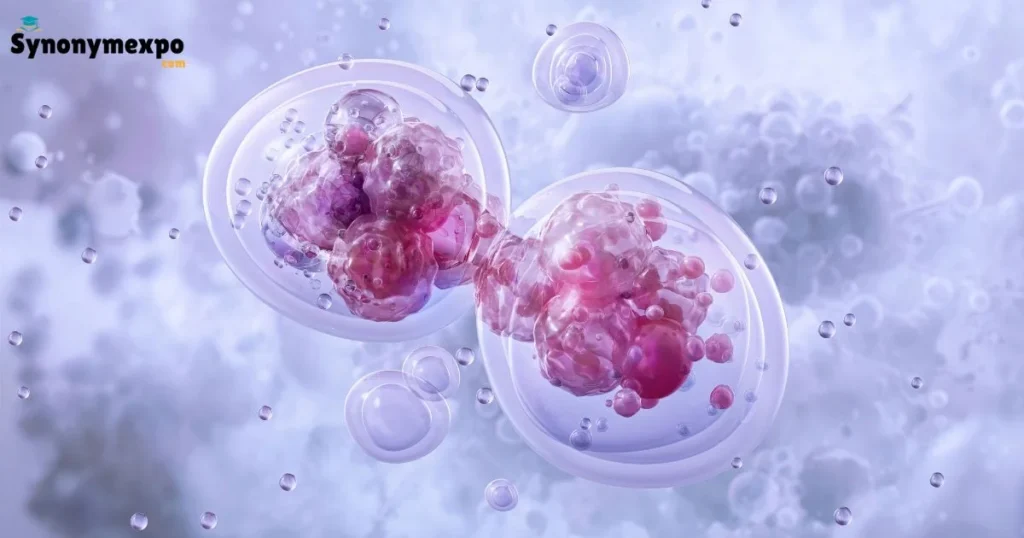
Meaning: Semi-fluid portion of cytoplasm, mostly water with proteins.
Explanation: Gives cytoplasm its gel-like consistency.
Use When: Referring to viscosity and mobility of cellular contents.
Examples:
- Ribosomes move within the cytosolic gel to synthesize proteins.
- The cytosolic gel provides support while allowing organelle movement.
6. Cell Matrix
Meaning: The internal framework supporting organelles.
Explanation: Offers structural integrity and nutrient transport.
Use When: Describing internal organization in biology classes.
Examples:
- The nucleus is suspended in the cell matrix.
- Transport proteins navigate through the cell matrix.
Read More: Synonyms for First of All | 35 Best Alternatives & Examples
7. Bioactive Fluid
Meaning: A fluid that supports biological activity.
Explanation: Contains enzymes, ions, and molecules essential for cell life.
Use When: Discussing cell metabolism or active transport.
Examples:
- Bioactive fluid enables energy production in mitochondria.
- Nutrients dissolve efficiently in the bioactive fluid.
8. Cytoplasmic Network
Meaning: The interconnected cytoplasm linking cell structures.
Explanation: Ensures organelles and molecules communicate effectively.
Use When: Teaching intracellular signaling or transport mechanisms.
Examples:
- Vesicles travel through the cytoplasmic network to reach the membrane.
- The cytoplasmic network coordinates metabolic processes.
9. Molecular Soup
Meaning: Informal term for cytoplasm filled with molecules.
Explanation: Emphasizes the mixture of proteins, enzymes, and ions.
Use When: Simplifying biology concepts for students.
Examples:
- The molecular soup in the cell aids rapid reactions.
- Researchers analyzed proteins floating in the molecular soup.
10. Cellular Gel
Meaning: Semi-solid form of cytoplasm.
Explanation: Helps maintain shape while allowing organelle mobility.
Use When: Discussing cytoplasm consistency and cell mechanics.
Examples:
- The cellular gel allowed mitochondria to move smoothly.
- During microscopy, the cellular gel appeared translucent.
11. Protoplasmic Stream
Meaning: Movement of cytoplasm within cells.
Explanation: Distributes nutrients and organelles efficiently.
Use When: Explaining cytoplasmic streaming in plant or animal cells.
Examples:
- Chloroplasts move along the protoplasmic stream in leaf cells.
- The protoplasmic stream helps equalize temperature inside cells.
12. Intracellular Gel
Meaning: Gel-like substance inside the cell.
Explanation: Provides support and facilitates molecular diffusion.
Use When: Highlighting cell interior consistency in labs.
Examples:
- The intracellular gel kept organelles suspended.
- Chemicals spread slowly through the intracellular gel.
Read More: Synonyms of Water Cycle | 35 Best Alternatives & Examples
13. Cytosol Matrix
Meaning: The liquid matrix of the cytosol.
Explanation: Acts as a site for chemical reactions and protein movement.
Use When: Discussing cytosolic functions in textbooks.
Examples:
- Enzymes operate efficiently in the cytosol matrix.
- The cytosol matrix connects different organelles for transport.
14. Fluidic Cytoplasm
Meaning: Emphasizes the flowing, liquid nature of cytoplasm.
Explanation: Highlights mobility and adaptability in cells.
Use When: Describing dynamic movement of molecules.
Examples:
- Fluidic cytoplasm aids rapid response to environmental changes.
- Nutrients distribute evenly through the fluidic cytoplasm.
15. Cellular Plasma
Meaning: The living, fluid portion of a cell.
Explanation: Supports metabolic processes and molecular movement.
Use When: Teaching cell biology basics to students.
Examples:
- Proteins are synthesized in the cellular plasma.
- The cellular plasma cushions organelles from damage.
16. Cytoplasmic Flow
Meaning: The movement of cytoplasm within the cell.
Explanation: Helps distribute nutrients, organelles, and signaling molecules.
Use When: Describing active transport or cytoplasmic streaming.
Examples:
- Nutrients travel through the cytoplasmic flow to reach the nucleus.
- Observing the cytoplasmic flow revealed how materials circulate inside cells.
17. Organelle Fluid
Meaning: Fluid surrounding organelles.
Explanation: Cushions organelles and facilitates their mobility.
Use When: Discussing organelle environment or intracellular buffering.
Examples:
- Lysosomes float in the organelle fluid to perform digestion.
- The organelle fluid ensures mitochondria remain properly suspended.
18. Protoplasmic Gel
Meaning: Semi-solid part of protoplasm, mainly cytoplasm.
Explanation: Provides internal support while allowing molecular movement.
Use When: Highlighting cytoplasm’s structural role in cells.
Examples:
- The protoplasmic gel maintained the shape of plant cells.
- Proteins diffuse through the protoplasmic gel to reach their targets.
19. Molecular Medium
Meaning: The medium within cells where molecules interact.
Explanation: Supports enzymatic reactions, signaling, and transport.
Use When: Explaining cellular reactions or molecular biology processes.
Examples:
- Enzymes work efficiently in the molecular medium.
- The molecular medium allows signaling molecules to diffuse across the cell.
Read More: Synonyms of Archaeology | 35 Best Alternatives & Usage Examples
20. Cytoplasmic Matrix
Meaning: Network-like structure of cytoplasm around organelles.
Explanation: Supports shape, molecular movement, and internal organization.
Use When: Teaching cell structure or discussing organelle interaction.
Examples:
- Ribosomes attach to the cytoplasmic matrix for protein synthesis.
- The cytoplasmic matrix ensures even distribution of nutrients.
21. Cellular Stream
Meaning: Flowing movement of cytoplasm within a cell.
Explanation: Helps transport organelles and nutrients efficiently.
Use When: Describing dynamic intracellular movement.
Examples:
- Chloroplasts moved along the cellular stream during photosynthesis.
- The cellular stream transports vesicles to the cell membrane.
22. Organelle Soup
Meaning: Informal term for cytoplasm containing organelles.
Explanation: Emphasizes the mixed and dynamic nature of the cytoplasm.
Use When: Simplifying cell biology for students or lay readers.
Examples:
- The organelle soup is essential for cellular metabolism.
- Proteins float freely in the organelle soup to reach their destinations.
23. Cytosolic Stream
Meaning: Flow of cytosol inside the cell.
Explanation: Facilitates transport of molecules and organelles.
Use When: Teaching cytoplasmic streaming or intracellular movement.
Examples:
- Vesicles travel along the cytosolic stream efficiently.
- The cytosolic stream helps maintain even nutrient distribution.
24. Intracellular Gel
Meaning: Gel-like substance inside the cell.
Explanation: Supports organelles and allows diffusion of molecules.
Use When: Discussing cell consistency or viscosity in biology.
Examples:
- Organelles remain suspended in the intracellular gel.
- Chemicals slowly move through the intracellular gel during reactions.
25. Biofluid Matrix
Meaning: A biologically active fluid network inside the cell.
Explanation: Supports metabolism and organelle movement.
Use When: Describing active intracellular environments.
Examples:
- The biofluid matrix aids intracellular signaling.
- Nutrients are carried efficiently through the biofluid matrix.
Read More: Synonyms of Dopamine | 35 Best Alternatives & Examples
26. Cytoplasmic Substance
Meaning: General term for material inside the cytoplasm.
Explanation: Includes cytosol, organelles, and dissolved molecules.
Use When: Referring broadly to cellular internal components.
Examples:
- The cytoplasmic substance houses enzymes for metabolism.
- Scientists studied the cytoplasmic substance under a microscope.
27. Cell Fluid
Meaning: The liquid portion of a cell.
Explanation: Supports nutrient transport and organelle movement.
Use When: Teaching basic cell biology.
Examples:
- Water and ions move freely through the cell fluid.
- The cell fluid maintains internal pressure and structure.
28. Molecular Gel
Meaning: Gel-like cytoplasm containing molecules.
Explanation: Provides a supportive medium for biochemical reactions.
Use When: Explaining viscosity and molecular movement.
Examples:
- Proteins diffuse slowly through the molecular gel.
- The molecular gel ensures organelles remain in place.
29. Intracellular Stream
Meaning: Flow of cytoplasmic material within the cell.
Explanation: Distributes nutrients, organelles, and signals efficiently.
Use When: Discussing cytoplasmic streaming in plants or animals.
Examples:
- Chloroplasts travel via the intracellular stream.
- The intracellular stream aids even chemical distribution.
30. Organelle Plasma
Meaning: Fluid surrounding and interacting with organelles.
Explanation: Helps maintain cell shape and organelle function.
Use When: Explaining organelle support in advanced biology.
Examples:
- Mitochondria float in the organelle plasma.
- Nutrient molecules disperse through the organelle plasma.
Read More: Synonyms for Table of Contents | 35 Alternatives & Examples
31. Protoplasmic Network
Meaning: Web-like structure of cytoplasm supporting organelles.
Explanation: Facilitates communication and transport within the cell.
Use When: Teaching cytoskeletal or cytoplasmic organization.
Examples:
- Vesicles move along the protoplasmic network.
- The protoplasmic network coordinates enzyme activity.
32. Cytosol Flow
Meaning: Movement of the cytosol portion of cytoplasm.
Explanation: Assists in transporting molecules and maintaining cell function.
Use When: Explaining intracellular movement in research contexts.
Examples:
- Nutrients travel through cytosol flow to reach the nucleus.
- The cytosol flow helps organelles adjust to cellular signals.
33. Cellular Cytosol
Meaning: The liquid component of the cytoplasm inside cells.
Explanation: Hosts metabolic reactions and supports organelle mobility.
Use When: Focusing on the liquid fraction of cytoplasm.
Examples:
- Proteins synthesize within the cellular cytosol.
- The cellular cytosol allows rapid diffusion of small molecules.
34. Bioactive Matrix
Meaning: Active network of cytoplasmic fluid and molecules.
Explanation: Supports cellular reactions, signaling, and transport.
Use When: Discussing active cellular environments in advanced biology.
Examples:
- The bioactive matrix facilitates enzyme interactions.
- Nutrients circulate through the bioactive matrix efficiently.
35. Organelle Matrix
Meaning: Structural and functional support network for organelles.
Explanation: Provides stability and organization inside the cell.
Use When: Referring to cell structure in scientific or educational contexts.
Examples:
- The nucleus is embedded in the organelle matrix.
- Enzymes diffuse through the organelle matrix to reach their targets.
Read More: Synonyms of Look | 35 Best Alternatives & Usage Examples
How to Choose the Right Synonym for Cytoplasm
Several terms overlap with cytoplasm, including protoplasm, cytosol, intracellular matrix, and cell sap, but each carries nuanced meaning:
| Synonym | Definition | Contextual Use |
| Protoplasm | Entire living content of a cell (nucleus + cytoplasm) | General cell biology discussions |
| Cytosol | The liquid portion excluding organelles | Biochemistry or molecular studies |
| Intracellular matrix | Network-like cytoplasmic structure | Advanced cell structural research |
| Cell sap | Plant-specific cytoplasmic fluid | Plant biology or botany studies |
Choosing the right term depends on precision and context. For example, cytosol emphasizes the liquid environment, while protoplasm implies the entire living substance. Professionals, educators, and writers must consider audience knowledge, scientific accuracy, and the cognitive clarity of their explanations to avoid conceptual confusion.
Cultural and Emotional Nuance of Cytoplasm
While cytoplasm is a scientific term, its teaching and interpretation vary across educational and cultural settings. In Western classrooms, cytoplasm is often used to introduce students to cellular dynamics, fostering curiosity about cell function and life processes. In other regions, emphasis may be placed on plant versus animal cells, highlighting vacuoles and cell sap as culturally relevant cytoplasmic components in botany curricula.
Emotionally, visualization of cytoplasm helps learners feel connected to the microscopic world, enhancing engagement and memory retention. Professionals may perceive cytoplasm as a metaphor for fluidity, adaptability, and interconnectivity, reflecting its dynamic role in supporting organelle movement, signal transduction, and cellular response mechanisms.
How to Recognize This Relevant Cellular Behavior
Understanding cytoplasmic activity requires observing key patterns and behaviors in cells:
- Organelle movement – Mitochondria and vesicles constantly shift through the cytoplasm.
- Cytoplasmic streaming – Visible in plant cells, this directed flow aids nutrient distribution.
- Metabolic hotspots – Regions dense with enzymes indicate active biochemical reactions.
- Response to stimuli – Cytoplasm reorganizes during cell division or stress responses, showing adaptability.
- Volume changes – Swelling or shrinkage signals osmotic shifts or environmental impact.
Example: In a plant exposed to light, chloroplasts move along the cytoplasm toward the cell surface to maximize photosynthesis efficiency, demonstrating cytoplasm’s dynamic role in cellular adaptation.
Read More: Synonyms of Disparate | 35 Best Alternatives & Usage Examples
Key Insight
1. What is the primary function of cytoplasm?
The cytoplasm supports cell structure and holds organelles in place. It also acts as a medium for chemical reactions within the cell.
2. How does cytoplasm help in nutrient transport?
Cytoplasm enables the movement of nutrients and molecules via diffusion or cytoplasmic streaming. This ensures organelles receive what they need efficiently.
3. Does cytoplasm store any substances?
Yes, the cytoplasm can store sugars, amino acids, and ions until the cell requires them for energy or growth.
4. How does cytoplasm protect organelles?
It cushions organelles from physical damage and helps maintain internal balance like pH and ion concentration.
5. Where do chemical reactions occur in the cytoplasm?
Most metabolic processes, including glycolysis and protein synthesis, take place in the cytoplasm’s enzymatic medium.
Conclusion
Understanding cytoplasm and its many synonyms from cellular fluid to protoplasmic network matters because it shapes how we grasp the inner workings of cells and connect microscopic biology to real-life processes. Recognizing these related concepts and variations helps students, educators, and researchers communicate clearly and accurately about cellular structure and function.
You can apply this knowledge in classrooms, scientific writing, or even casual explanations of biology. For instance, describing intracellular medium or cytosolic gel can make your examples more precise, relatable, and understandable.
Remember, exploring terms like bioactive matrix or cytoplasmic flow isn’t just memorization—it’s about curiosity and connection. Keep learning, asking questions, and letting your understanding of cells guide you in expressing science confidently and clearly.

Hi, I’M Jane Austen, the Admin of synonymexpo.com. I share the best word alternatives, synonyms, and language tips to help you write smarter and express ideas clearly.